“If you want to go fast, go alone. If you want to go far, go together.”
I grew up hearing this African proverb and picturing the tortoise slowly and steadily crossing the finish line first. What I did not yet understand was that the tortoise never travels alone. Her shell is habitat and archive at once. It protects our girl from predators, records her lifetime in distinctly unique rings, and sustains an ecosystem that could not survive without her.
Narrative functions the same way. It protects, records, and sustains.
Effective narrative stewardship builds power for communities whose stories have been subjugated. It blocks power from dominant structures that rely on narrowing who is credible, imaginable, or legitimate.
Across justice efforts, education reform, conservation, and Film & TV, I have seen the same pattern of narrative as infrastructure. It determines who holds interpretive authority, how stories are constructed, and to what end they are deployed.
Three levers where that power moves are purpose, process, and people.

PURPOSE
The shell’s primary function is protection. Purpose determines what a narrative protects and what it exposes.
Narrative builds power when it restores agency over meaning.
In working with district educators divided over instructional effectiveness, I supported a reconciliation process grounded in a simple line of questioning: What story are we telling, and whose is it? That inquiry culminated in a video-based training platform where educators with differing philosophies shaped a more holistic definition of effective teaching. The result was not cosmetic, but earnest expansion of whose voices counted in defining learner success, and how to leverage that expansion for actionable teacher feedback, particularly in schools serving disenfranchised communities.
Conservation leader Sam Cook Jr. recently described the largest intergenerational land transfer since the homesteading era. He emphasized that the work is not technical, but generational. Cook told the story of how a Black southern family who had reclaimed the deed to their land after a fifteen-year legal battle was not just securing property. They were reclaiming narrative authority over legacy in ensuring that the land would actually remain a forest. “Purpose” here protected continuity.

Narrative blocks power when it exposes the imaginative limits of dominant institutions.
Years ago, the protagonist of one of my films, a foster-raised young woman from my hometown of East New York who had entered the Ivy League, was deemed unbelievable. Unbelievable, in subsidy terms, meant unfundable. The issue was not plausibility. It was legibility. Despite the character being inspired by real-life overcomers, the industry had not encountered a narrative like hers and did not know where to place it.
Dominant narratives often operate by narrowing who is authorized to define their own reality. When we expand narrative purpose to include pluralistic stories, we expand who is imaginable. That advancement blocks gatekeeping powers of institutions that withhold resources from stories they cannot categorize.
Purpose determines whose future becomes possible.
PROCESS
If purpose determines direction, process determines formation. A shell is not decorative. It forms slowly, through pressure and adaptation. Narrative process determines who authors reality.
Process builds power when those most impacted shape narrative construction itself.
When commissioned to design Black Men Teach’s first high school fellowship curriculum, I embedded storytelling training into the program. Fellows learned interview technique, elevator pitch construction, and shot design along with pedagogical tenets not as enrichment, but as capacity. The goal was narrative sovereignty. Those Black boys in Minnesota’s Twin Cities would not need to rely on others to interpret their activism or their communities.
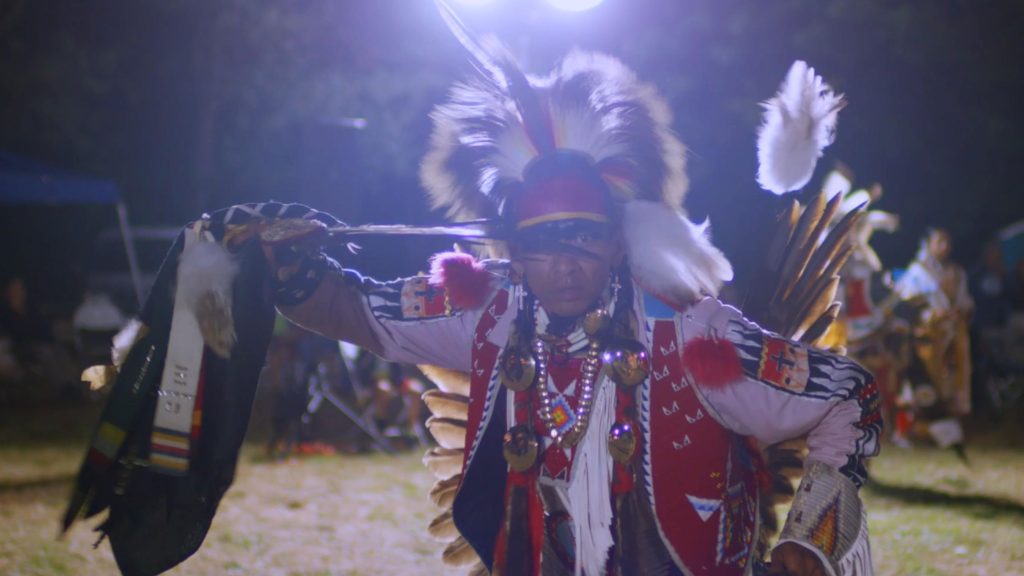
Indigenous filmmaker Sky Hopinka models this discipline beautifully. The final shot of his documentary Powwow People is a half-hour uncut take of a First Nations powwow. He does not direct the moment. He surrenders to it. That abdication of control is not aesthetic indulgence. He actively redistributed authorship to create award-winning cinema enduring institutional scrutiny because it was crafted through a lens of authenticity, not industry convention.
Process blocks power when it refuses extractive storytelling.
When process is co-authored, dominant systems lose the ability to sanitize, flatten, or sensationalize folk’s experience. In co-producing Forget-Me-Not with Val Carey, whose sister Miriam was unjustly killed in 2013 by law enforcement officers that have not been named to this day, the structure of the story mattered as much as its content. Accountability, grief, and joy were narrated by Val from within. Our process prevented a voyeuristic account of Miriam’s truncated narrative.
Without redistribution of authorship, counter-narratives collapse under pressure. With it, they harden into protective frameworks.
PEOPLE
The shell is also habitat. It sustains life beyond the tortoise itself. Narrative builds power when directly impacted people define their own conditions. It blocks power when it interrupts dominant claims to neutrality.
Brown Girl Dreaming author Jacqueline Woodson was one of the first to say that the more specific a story, the more universal it becomes. Specificity is not indulgent. It is clarifying.
People-centered narrative builds power by repositioning experience as evidence.
In a governmental video campaign focused on housing access for formerly incarcerated individuals, statistics already showed that justice-impacted individuals make ideal tenants. Yet stigma persisted. By platforming returning citizens to narrate their own experiences with housing discrimination, the campaign shifted perception among landlords and real estate professionals. Stigma lost invisibility so that their testimonies carried analytic weight.

Similarly, while leading implementation management of a career exploration app for youth workforce agencies during the upheaval of Summer 2020, I encountered a credibility gap amplified in conversations with concerned partnering community-based organizations. Youth were navigating public health and racial crises, yet the platform’s career pathways did not explicitly address equity. I proposed and led design of the app’s first social justice module, infusing the user experience with community-based stories and activist trajectories. The module integrated organizing and civic engagement into viable professional identities. For young people, especially those from immigrant and underserved communities, that shift expands ambition for them to see themselves as change agents.
People-centered narrative blocks power by challenging who is deemed credible.
When youth, immigrants, Indigenous or returning citizens narrate their own realities, dominant narratives about risk, deficit, or deviance weaken. Interpretive authority shifts, and systems are compelled to respond rather than define. Fueled by this principle, I originated a talkback series for a nonprofit advancing more equitable, forward-thinking educational models. The conversations were led by youth, whom I collaborated with around panelist questions and facilitation, platforming them as experts in their own learning journeys. Ecosystem leaders from KnowledgeWorks, America Succeeds, and Education Reimagined participated, placing learner testimony at the center of ongoing advocacy for competency-based credentials.
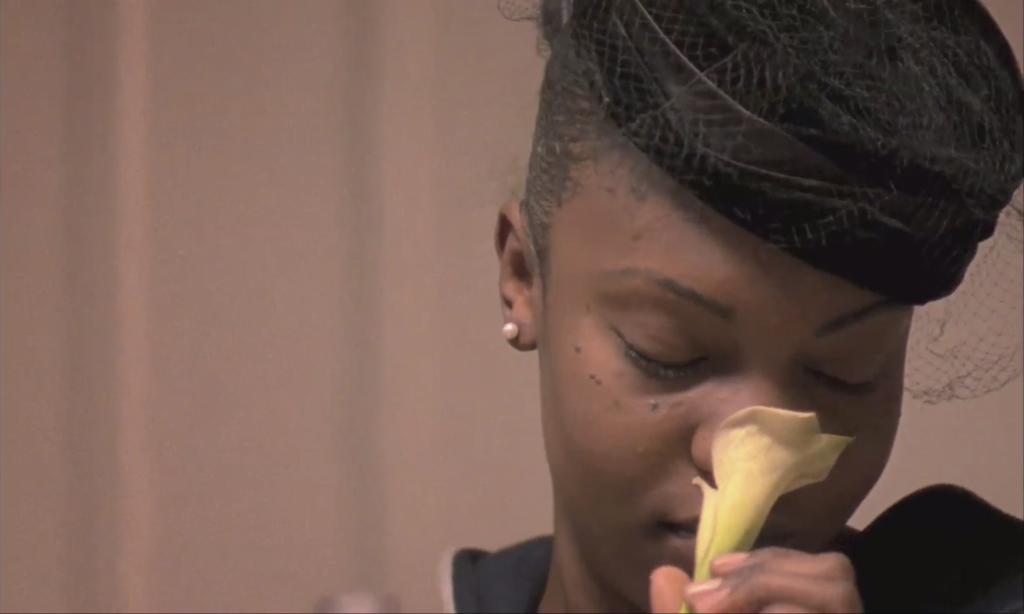
I went on to make Jackie., that short film centering a Black Brooklynite aged out of foster care and thriving in the Ivy League. It stands as one of a handful of projects shot, written, directed, and produced by Black women, selected for Oscar-qualifying film festivals. Marginalized voices, like those of Black women, are not messaging assets. They are political actors. When they are in the driver’s seat of narrative production, culture shifts.
Ultimately, effective narrative stewardship is sector agnostic.
Whether documenting Montserratian ocean conservationists as knowledge holders, writing about the compounded trauma of healthcare and legal systems that disparage Black women, or designing storytelling workshops where middle schoolers examine American historical canons through unsung heroes like Claudette Colvin, the work remains consistent: recalibrate who holds interpretive authority, how narrative is constructed, and to what end it is positioned.
Power transfers when evidence and (lived) experience align. It transfers when process distributes authorship. It transfers when purpose protects possibility. The tortoise endures not because she is fast, but because her shell is durable. Our girl carries and is carried.
Protection, archive, habitat.
Narrative, stewarded well, does the same.